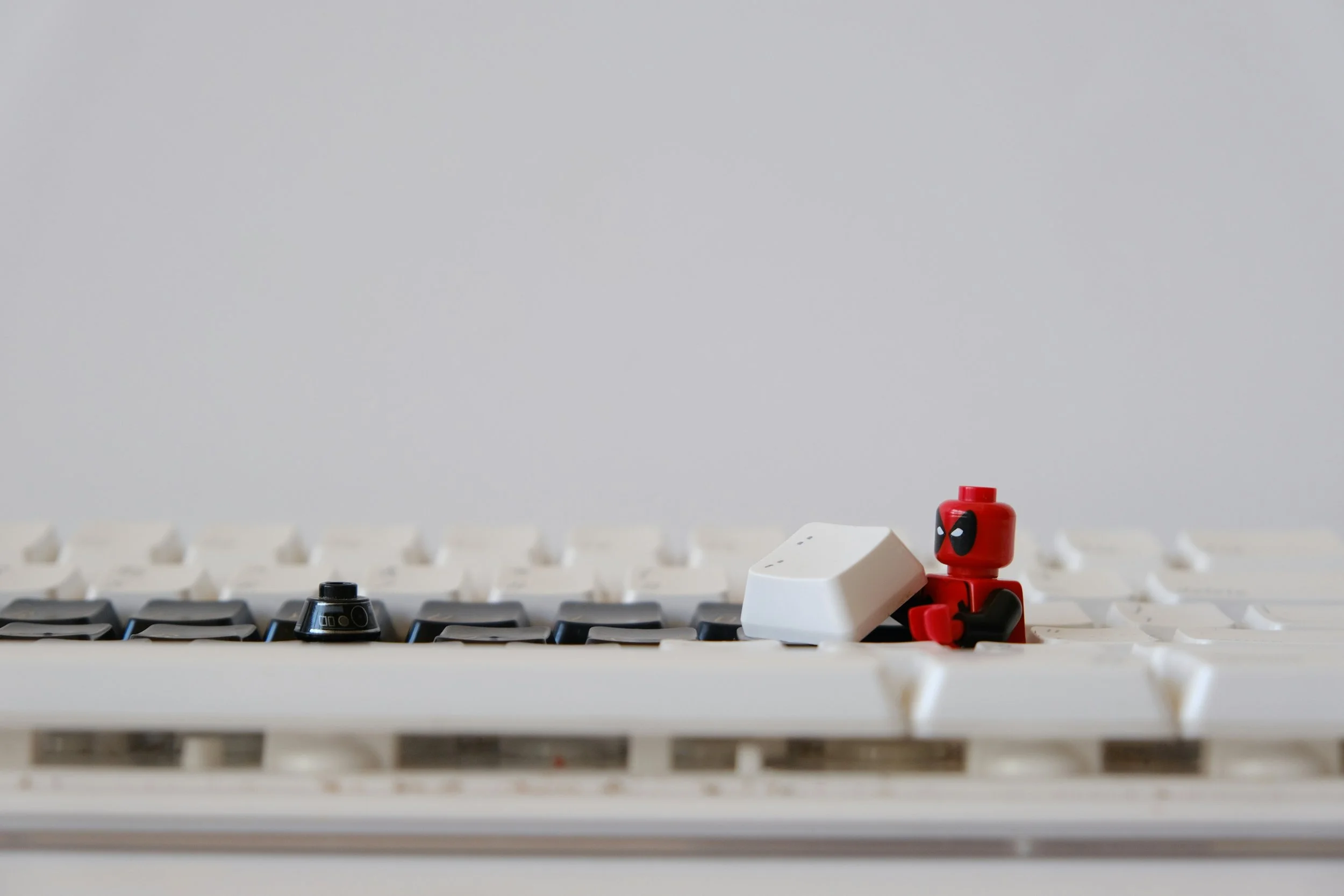
Boom Box Post intern, Renata Schmult, is on a mission to expand her keyboard shortcut muscle memory! She drafted up some questions for an office-wide survey to learn about each of our editors’ favorite, most used and custom shortcuts for sound editorial work. In this post, we share the results and take a look at the similarities and differences of each editor’s shortcut workflow. We hope you learn a new shortcut or workflow tip from this post! Enjoy.
As vast as our sound effects library is here at Boom Box, we're still frequently faced with on-screen actions that can only be convincingly brought to life by recording original sounds. Last week, sound effects editor Brad Meyer was working on a project that had a hula-hooping scene. These hula hoops, in particular, were the bead-filled type that rattle with every movement. Brad tried everything in the library, from maracas, shakers, rain sticks, bean bags to pill bottles… nothing quite captured the sound convincingly. We put our intern, Renata Schmult, to work, tasking her with a hula hoop recording session to capture the authenticity of these hula hoops.
If you've spent a Fourth of July in Los Angeles, you know the city transforms into one giant fireworks show. For sound designers, it's also one of the best opportunities of the year to capture unique explosions, whistles, crackles, and distant booms for future projects. In this post we’ll take a listen to the ambience recordings I captured and how to process them to make them library-ready.
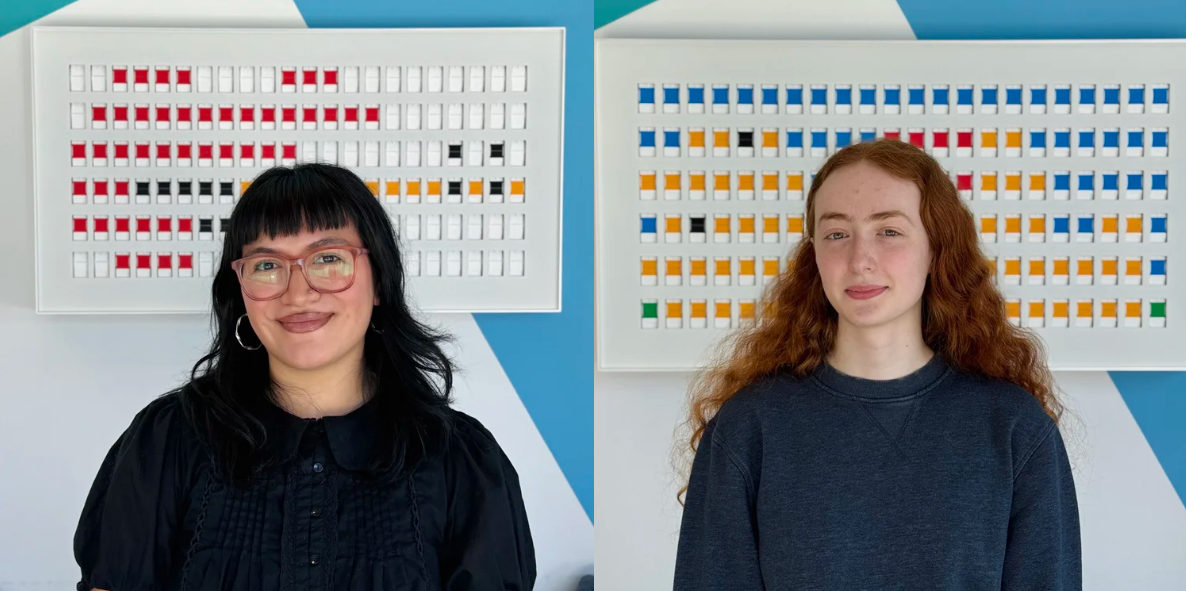
Meet Boom Box Post’s newest interns, Jennifer Bonilla and Renata Schmult!
As sound editors, we have our own vocabulary for describing the characteristics of the sounds we use in our work. We have our own terminology to describe pitch, timbre, frequency, weight, timing, and even emotion… Sometimes instead of using vocabulary we just replicate the sounds with our mouths… but when we’re discussing our sounds with other collaborators with different backgrounds we may need to reframe how we describe our sounds. As a fun exercise, I started exploring classic musical terms like legato, staccato, and crescendo through the lens of sound effects. In this exercise I researched the terminology and brainstormed sound effects that represent the terms. This exercise was a fun way to expand my musical vocabulary to better communicate sound with collaborators!
Fair warning, I don’t want this post to come across as just another mixer rant… and I’ll do my best to keep things civil. I’ve been keeping track of a few bad habits I see in editorial that drive me a bit batty on the mix stage. So in an effort to “being the change I want to see in the world, I’m going to share them with you. Hopefully this will result in less of these nits to pick going forward and, as a bonus, its free therapy for me!
There’s a powerful Pro Tools feature I’ve been using more and more in my editorial as of late and after chatting with other editors in the office I’ve realized it’s commonly overlooked. It’s using sync points when syncing your audio in the timeline!
What’s that sound? Summer is just around the corner! To get us in the summertime spirit, we brainstormed a few of our favorite summer sounds and either recorded, designed or pulled clips from our library to serve as clues for this crossword puzzle. Can you solve the puzzle using only your ears? Let us know in the comments!
Our spring intern Eli Bahner is finishing up his time with us here at Boom Box. It’s been a pleasure working with Eli this spring and we’re excited for what the future holds for him in the sound industry! We took a moment to sit down with Eli for a quick Q&A to hear his thoughts on his internship with us.
I recently handled a mix assembly for the first time and although on paper it’s a very straightforward process, it’s extremely detailed and can be quite time consuming. I consulted our Studio Engineer, Tim Vindigni for tips and he had just discovered that Pro Tools updated a feature in the Import Session Data window that’s extremely useful for the assembly process: Match Tracks! Let’s take a look at how it works.
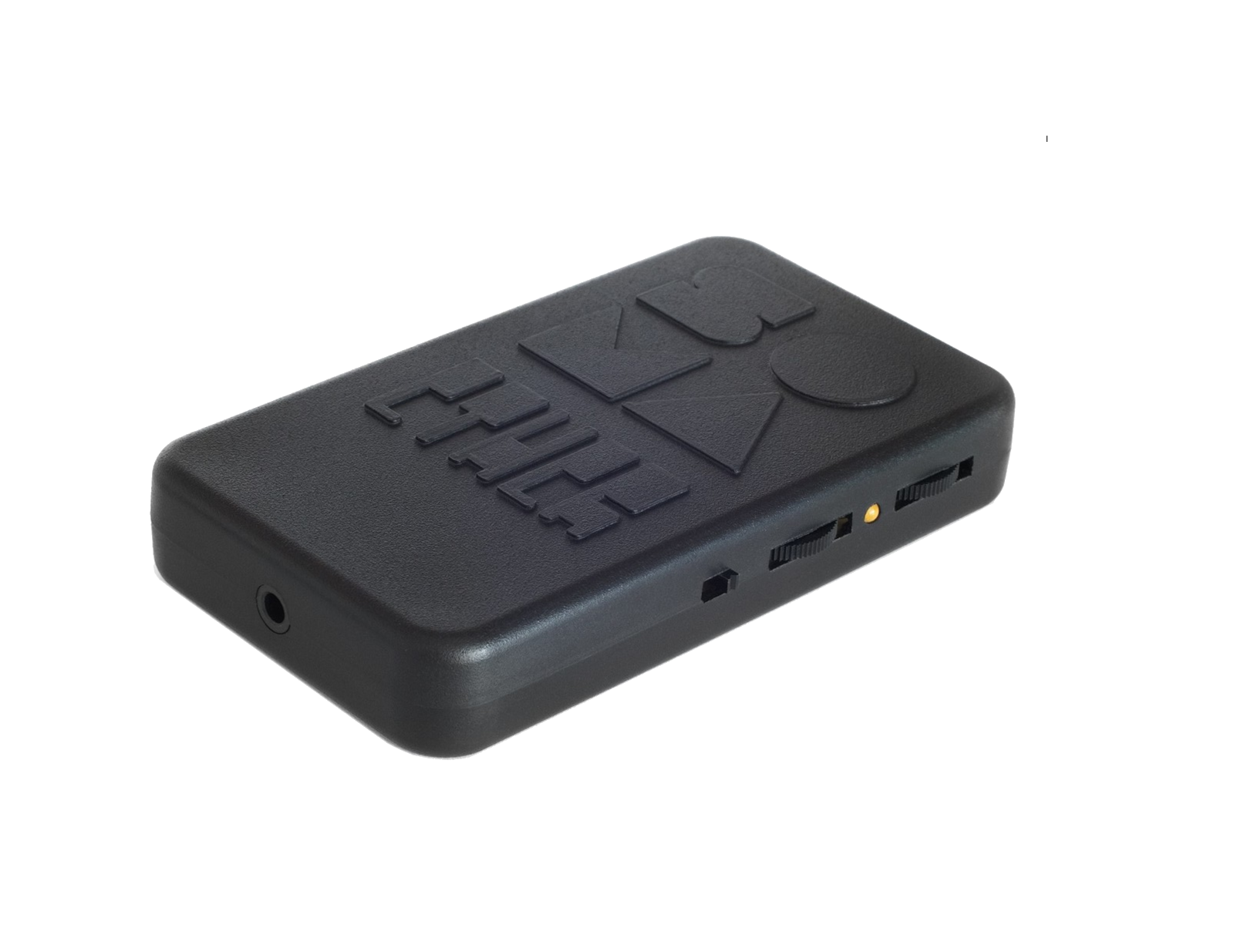
ETHER is an electromagnetic field receiver — essentially a wide-band “anti-radio.” Rather than tuning to one radio station or frequency, it captures a huge swath of the electromagnetic spectrum (from very low to very high frequencies) all at once.
Essentially, you turn Ether on, wave it around, and it picks up all of the sound we can’t hear with the naked ear - WiFi Signals, radio transmissions, power lines, lighting. It brings magnetic fields and radio waves to light. WILD!
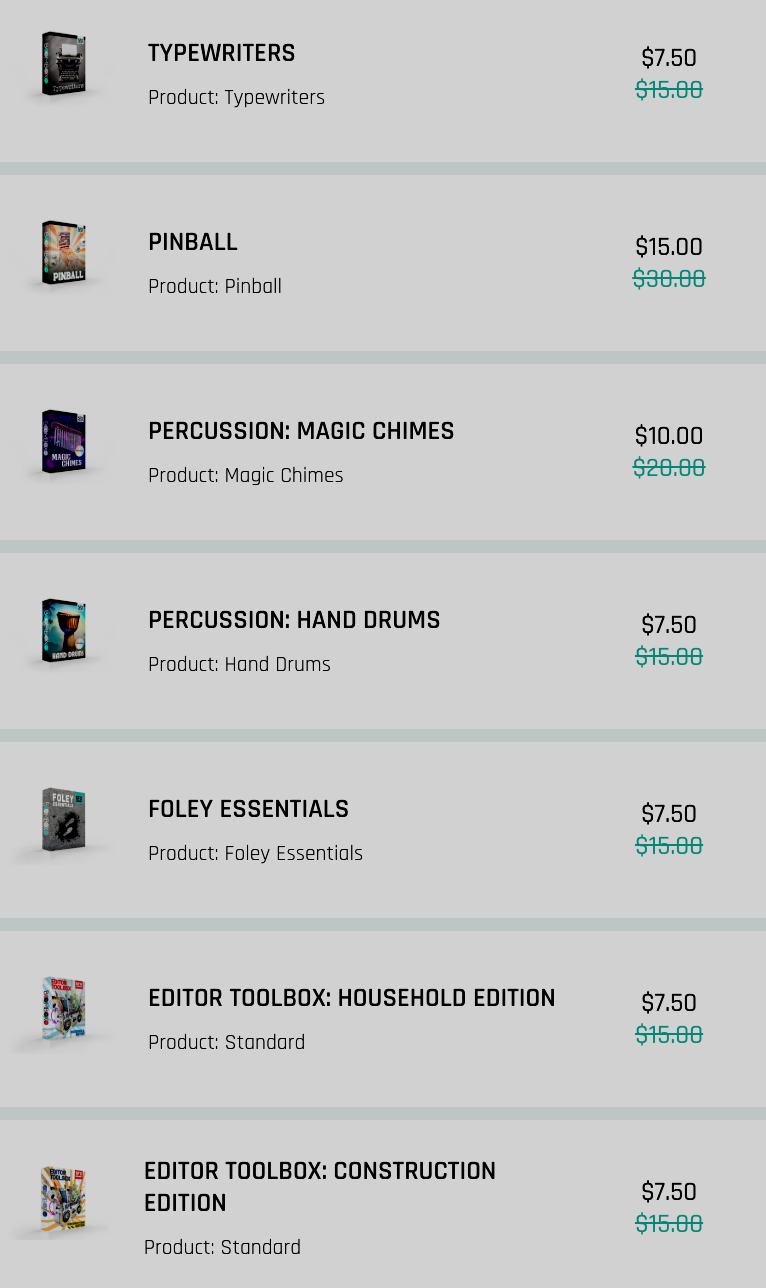
Boom Box Library is now hosting an enormous spring sale. Our entire Boom Box Library site is 50% off with code SPRING50.
That means that you can now get any single library for half price, or scoop up our Everything Bundle, and receive every library for just $175. That’s 50% off an already heavily discounted price!
Don't miss this chance to elevate your sound library at half the cost. The savings won't last, so stop by today.
In this edition of Inside Sound Design, we spoke with Supervising Sound Editor, Brad Meyer about a recent recording session for creature vocals. Hear how he approached the recording and post-processing to design a "monster hellscape."
We have a few updates to share with you! First off, we’re beyond excited to announce our most recent releases this spring. Whether it’s a brand new series premiere or another season of a long-running favorite—it’s always such a rewarding experience to finally share our hard work with you. We’re also so honored to have been a part of the celebration this year at both the 4th Annual Children’s and Family Emmys as well as the 73rd MPSE Golden Reels! Please enjoy these Spring 2026 updates from the Boom Box Post team!
We asked sound effects editor, Jayson Niner to design a panic dream montage and discuss his process. Take a listen!
In this post we’ll take a look at the sound design layers that combine to make the signature sound of The Loud House fight cloud, as heard in the scene below:
So you’ve just recorded the coolest sound out in the field, but it’s buried underneath environmental sounds like distant cars, planes, humans, birds, insects etc… How do we isolate these sounds and minimize that background noise? This is NOT another Izotope RX post. Instead we’re going to talk about a common yet sometimes forgotten audio processor that can help reduce your noise floor and make these recordings more usable.
The 73rd MPSE Golden Reel Awards ceremony is quickly approaching! On March 8th we’ll be gathering with friends and familiar faces to celebrate the work of the most talented in our industry. We’re beyond excited and feeling so honored to have received three nominations this year! In this post we dive into the sound behind our nominated series, hearing directly from the supervising sound editors. Enjoy!
Meet Boom Box Post’s newest intern, Eli Bahner! To learn a bit more about Eli, we sat down for a quick Q&A. Here’s what he had to tell us!
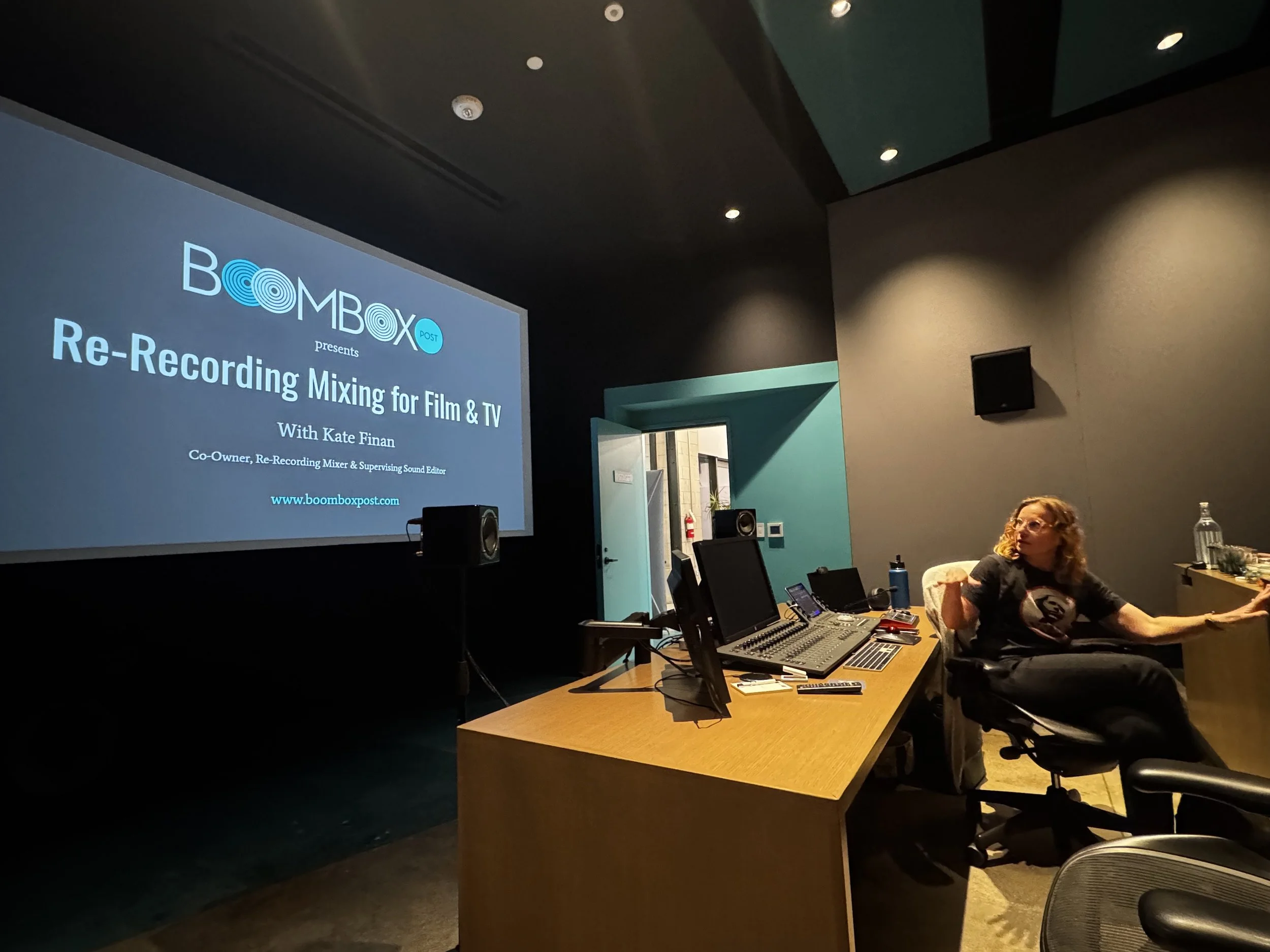
Near the end of last year, we once again hosted Women’s Audio Mission for a workshop, this time on Re-Recording Mixing for Film & TV. This in-depth post-production sound workshop covered the basics of the re-recording mixing process and also included an interactive mixing session where attendees had the opportunity to work at the console and in ProTools to mix in sound elements and experience the tools and process.